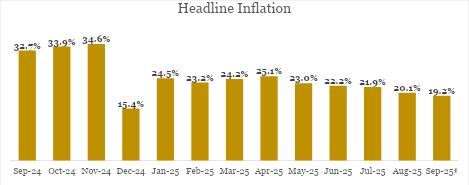
The National Bureau of Statistics (NBS) is scheduled to release the September 2025 Consumer Price Index (CPI) and Inflation Report on October 15. Based on our model, headline inflation is projected to ease further to 19.22%, down from 20.12% in August. The sustained moderation in inflation largely reflects the combined effects of favorable base effects, ongoing harvest season, and sustained exchange rate stability. Notably, the Naira strengthened, trading below the ₦1,500/$ mark toward the end of the month, supported by increased dollar inflows and relatively weak demand pressures. Meanwhile, month-on-month inflation is projected to rise to 1.75% in September, up from 0.75% in August, partly reflecting the impact of disruptions in the oil and gas sector stemming from the dispute between the Dangote Refinery and PENGASSAN.
Food Inflation Projected to Decline to 21.05%
Food inflation is projected to ease to 21.05% in September from 21.87% in August, supported by the ongoing harvest season and sustained Naira stability. Improved food supply from major producing regions and lower imported inflation pressures are expected to contribute to this moderation, providing some relief to consumers and overall price stability.
Core Inflation to Ease to 19.89%
Similarly, core inflation is projected to ease to 19.89% in September from 20.33% in August, reflecting the positive effects of sustained stability in the foreign exchange market. The reduced volatility of the Naira has helped moderate imported inflationary pressures, particularly across non-food categories such as manufactured goods, household appliances, and pharmaceuticals sectors, which are highly sensitive to exchange rate movements.
Outlook
The short-term inflation outlook will largely depend on the stability of the exchange rate, movements in global commodity prices, and trends in domestic food supply. Although favorable base effects are likely to persist in the coming months, maintaining lower month-on-month increases will be critical to sustaining the ongoing disinflation momentum. Improved crude oil production and increased capital inflows could further strengthen the Naira, helping to moderate imported inflation pressures. However, potential risks persist from adverse weather conditions affecting agricultural output, possible inflationary spillovers from Trump’s recent tariff measures, and volatility in global oil prices.